
Wondering how to keep your home clean with a busy schedule? Learn realistic cleaning routines, time-saving habits, decluttering strategies, and simple systems that work for busy people.

Keeping your home clean sounds simple until your calendar is packed with work, family responsibilities, errands, appointments, and the thousand little things that seem to appear every day, and finally sit down. Then you notice the dishes. The laundry. There are some crumbs on the kitchen floor. The pile of things that somehow migrated onto the dining table.
You tell yourself you’ll deal with it tomorrow. Then tomorrow arrives. This is why keeping a house clean with a busy schedule can feel so difficult. The problem isn’t necessarily that you’re lazy or disorganised. More often, the traditional idea of cleaning simply doesn’t fit the way modern life works. Most cleaning advice assumes you have a spare Saturday afternoon. Many busy people don’t.
The better approach is to stop thinking about cleaning as one enormous household chore and start thinking about it as a system. A few minutes here, a small reset there, some smarter storage, and a realistic weekly rhythm can prevent your home from reaching the point where cleaning becomes an all-day project. The goal isn’t a spotless house. The goal is a home that is clean enough, comfortable enough and easy enough to reset that it doesn’t constantly sit at the back of your mind.
1. Stop Trying to Clean Everything at Once
One of the biggest mistakes busy people make is waiting until the house is a mess and then attempting a massive cleaning session. That approach is exhausting, and it can make cleaning feel like an endless chore. Instead, divide your home into small, manageable tasks.
For example:
- Monday: Bathroom
- Tuesday: Kitchen surfaces and appliances
- Wednesday: Bedrooms
- Thursday: Floors
- Friday: Laundry and clutter
- Saturday: Deeper cleaning
- Sunday: Rest or quick reset
You don’t need to follow this exact schedule. The important part is spreading the workload across the week. When cleaning becomes a series of small tasks rather than one enormous project, it becomes much easier to fit into a busy day.
2. Use the 10-Minute Cleaning Rule
You don’t always need an hour to make your home look noticeably better. Set a timer for 10 minutes and focus on one area. During those 10 minutes, don’t worry about doing a perfect job. Pick up clutter, wipe surfaces, put things away, or deal with whatever is most visible.
A useful approach is:
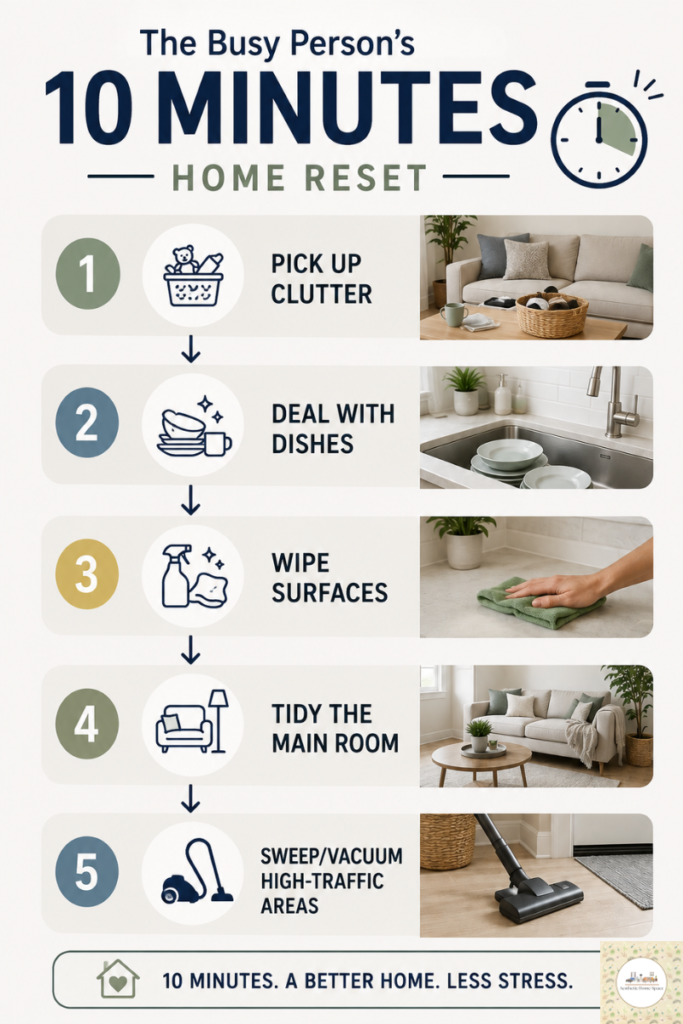
The secret is consistency. Ten minutes every day is often more useful than promising yourself that you’ll spend three hours cleaning on Sunday.
3. Clean While You Wait
Busy schedules contain more cleaning opportunities than you might realise. Waiting for the kettle to boil? Wipe the kitchen counter. Waiting for food to cook? Wash a few dishes. Waiting for a shower to warm up? Quickly wipe the bathroom sink. Waiting for a meeting to start? Put away the items sitting on your desk. These tiny tasks don’t feel like cleaning sessions, but they prevent small messes from accumulating. Think of it as “micro-cleaning”: completing tiny jobs during time that would otherwise be unused.
4. Follow the “Don’t Put It Down, Put It Away” Rule
Clutter can make a reasonably clean home look messy. A simple rule can help: when you finish using something, return it to its proper place immediately.
- Instead of leaving clothes on a chair, put them in the wardrobe or laundry basket.
- Instead of leaving cups around the house, take them to the kitchen.
- Instead of dropping mail on the counter, sort it when you bring it inside.
This is why one of the most effective cleaning habits for busy people is the reset. A reset isn’t deep cleaning. It’s simply returning a room to a usable starting point.
- After breakfast, reset the kitchen.
- After getting dressed, reset the bedroom.
- After working at the dining table, reset the workspace.
- Before bed, reset the main living areas.
You aren’t trying to make the house perfect. You’re preventing today’s mess from becoming tomorrow’s cleaning project. This habit takes seconds but saves you from having to perform a large tidying session later. If everything has a designated home, putting things away becomes much easier.
5. Focus on High-Impact Areas
When you’re short on time, don’t try to clean every corner equally. Some areas affect how clean your home feels much more than others.
Prioritise:
- Kitchen counters
- Dining table
- Bathroom sink and toilet
- Living-room surfaces
- Floors in high-traffic areas
- Visible clutter
For example, vacuuming an entire house may take 30 minutes, while quickly vacuuming the hallway, kitchen, and living room might take 10 minutes and make the whole home feel significantly cleaner. When time is limited, clean what you see and what you use most.
6. Use a Weekly Cleaning Schedule
A weekly schedule removes the need to constantly decide what needs cleaning.
Here’s a simple example:
| Day | Main task | Approx. time |
| Monday | Bathroom | 15–20 min |
| Tuesday | Kitchen | 15–20 min |
| Wednesday | Bedrooms | 15 min |
| Thursday | Floors | 20 min |
| Friday | Laundry + clutter | 15–20 min |
| Saturday | Deeper cleaning | 30–60 min |
| Sunday | Quick reset | 10–15 min |
If you miss a day, don’t try to “make up” for it by doubling the workload. Simply continue with the next task. A cleaning schedule should reduce stress, not create another obligation.
7. Use the One-Room-at-a-Time Method
When you only have 20 or 30 minutes, avoid bouncing between rooms. Choose one room and finish the most important tasks there.
For example, if you’re cleaning the bedroom:
- Pick up clothes.
- Put rubbish in the bin.
- Clear surfaces.
- Make the bed.
- Dust visible surfaces.
- Vacuum or sweep the floor.
Then stop. A finished room gives you a sense of progress, whereas doing five minutes in six different rooms can make it feel as though you haven’t achieved anything.
8. Reduce the Amount of Stuff You Have to Clean
One of the most effective cleaning hacks is surprisingly simple: own less stuff. Every item in your home requires some combination of storage, dusting, organising, washing, or moving. If your surfaces are constantly covered with decorative objects, paperwork, gadgets, and miscellaneous items, cleaning will naturally take longer.
Try a quick decluttering rule:
If you haven’t used it in a long time and it isn’t useful, sentimental, or genuinely valuable, consider removing it.
You don’t have to declutter your entire home in one weekend. Start with one drawer, one shelf, or one cupboard.
9. Make Everyone Responsible for Their Own Mess
If you live with other people, cleaning shouldn’t automatically become one person’s job. Even young children can have simple responsibilities.
For example:
| Person | Possible responsibility |
| Adults | Kitchen, bathrooms, laundry |
| Older children | Bedrooms, dishes, rubbish |
| Younger children | Toys, books, clothes |
| Everyone | Put personal items away |
The goal isn’t to divide every chore perfectly. It’s to stop one person from becoming the household’s permanent cleaner. A five-minute contribution from several people can save one person a significant amount of time.
9. Don’t Ignore the Kitchen
A dirty kitchen can make the entire home feel untidy. The most useful kitchen habit is to avoid going to bed with a completely full sink.
You don’t necessarily need to deep-clean the kitchen every night. Focus on the basics:
- Wash or load dishes.
- Wipe the counters.
- Clean obvious spills.
- Put food away.
- Empty rubbish when necessary.
- Quickly sweep visible crumbs.
This small reset means you wake up to a usable kitchen rather than yesterday’s unfinished chores.
10. Keep Cleaning Standards Realistic
A major reason people struggle with cleaning is perfectionism. You don’t need every surface to be spotless every day.
A practical cleaning standard might be:
Daily: Keep clutter under control and deal with obvious dirt.
Weekly: Clean bathrooms, floors, kitchen surfaces, and bedding.
Monthly: Tackle less frequent jobs such as appliances, windows, cupboards, and hard-to-reach areas.
Occasionally: Deep-clean areas that genuinely need extra attention.
This approach gives you a clean and functional home without demanding unrealistic amounts of time.
Keeping a home clean with a busy schedule isn’t about finding a magical cleaning product or discovering a secret technique. It’s about changing the way you think about cleaning. Don’t wait for a free afternoon. Don’t try to clean the whole house every time. Don’t spend your limited energy making an already-clean area perfect. Instead, clean in small bursts, focus on high-impact areas, reduce clutter, share responsibilities, and create routines that fit naturally into your day. A home can be clean without being spotless. It can be organised without being perfectly organised. And most importantly, cleaning should support your life rather than consume it.
Start with just one habit: spend 10–15 minutes resetting your home every day. Once that becomes automatic, add another small habit. Over time, those small actions can turn cleaning from a stressful weekend project into something that simply happens as part of everyday life.
